
Originally published in Inqaba ya Basebenzi No. 6 (May 1982).
Neil Aggett, “found hanged” in his detention cell at 1.30am on 5 February, is believed to be the 51st person to die in the custody of the security police since 1963. At his death, aged 28, he was Transvaal organiser of the Food and Canning Workers’ Union and African Food and Canning Workers’ Union.
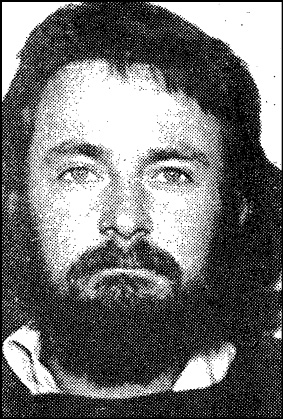
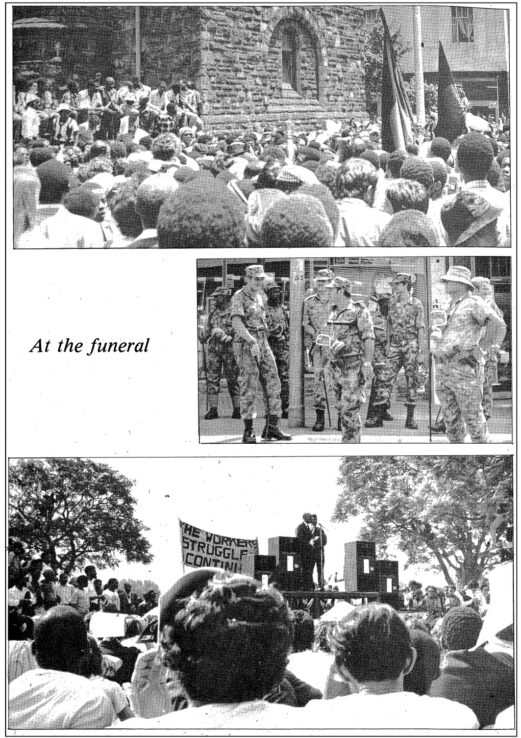
Born in Kenya of settler parents, qualifying as a medical doctor at UCT in 1976, Neil died as a fighter for the working class. In the half-hour work-stoppage protesting his death, at his funeral and in many statements of tribute, thousands of workers have shown their anger at the murder of a comrade.
The course of Neil’s all-too-brief life reflected his growing understanding that the struggle for democracy and social justice in SA is wholly bound up with the struggle of the working class to organise for taking control of society.
Though an able student, Neil learnt mainly from his experiences, and through the experience of others. Living simply, approaching all he met with equal respect, he exuded a quiet strength which won him the trust of those he met and those he worked with.
In overcrowded black hospitals in Umtata and Tembisa, and at Baragwanath, Neil’s work exposed him to the nightmare inflicted on workers and their families by the system of profit and racial dictatorship.
The ‘Friday night shift’ at Baragwanath is an assembly line for sewing up shattered bodies: each weekend 40-50 deaths are recorded. Neil worked this shift to earn his keep even when a full-time organiser; and afterwards would report straight to the union office for the day.
He won respect among staff and patients as one of the few white Baragwanath doctors who made an effort to speak Zulu to consult directly with those he treated.
Neil maintained an appreciation of life which ranged from Sartre’s novels to boxing. He never wrote anyone off. Living in Doornfontein and Kensington, he kept warm relations with his white working class neighbours, despite political differences.
Neil showed his honesty, courage, and resolve by unflinchingly taking-up in practice those tasks which he came to understand were necessary in order to further the struggle.
Through the Industrial Aid Society – where he was involved in setting up a section dealing with work injuries – and then as a trade union organiser, he applied himself to what was required of him with modest, hard-working dedication.
The tribute by his union bears witness to this:
The Union had no resources whatever – no funds with which to buy a vehicle, or pay salaries, rent offices – other than the 20c subscriptions that each member contributes. Neil … was always willing to assist officials with lifts to the factories. Later … he was asked to help in an official capacity…
At the time all the resources of the Union were thrown into the Fattis and Monis strike … the Union resolved … to organise the Fattis and Monis factory in Isando… After various attempts … had failed, Neil was entrusted with the task. He set to work with commitment and great persistence, organising house meetings, and … in the hostels of Tembisa.
…the gains won by the workers (at Fattis and Monis) were the basis on which other workers in Tembisa were organised. Neil … sought to root the Union in the daily lives and struggles of the working people of Tembisa. As a result this was the area of the Union’s most rapid growth. Through the same methods … our Union also grew and was consolidated in other areas.
Neil … never sought to build up a personal following…He was greatly loved by the workers and our Union is proud to have been associated with a person of his calibre.
In the months before his detention when (like other organisers) he was increasingly harassed by the security police, Neil had been entrusted with convening the follow-up meeting to the Langa unity conference. His choice for this work reflected his commitment to the building of a strong, united democratic trade union movement, and his ability to see beyond the personal and political tensions which inevitably arise in uniting different organisations.
In striving to build mass democratic trade union unity, activists will strengthen the struggle for workers’ democratic’ rule through which alone health and prosperity can be achieved for all – a goal for which Neil gave his life.
© Transcribed from the original by the Marxist Workers Party (2022).
